Commercial buildings depend on many systems working together every day. Air-conditioning, ventilation, pumps, controls, alarms, and monitoring equipment all affect comfort, energy use, and daily operations.
When these systems run separately, it is harder to spot problems early or manage the building efficiently. That is why BMS integration in Singapore has become such an important part of commercial building performance. BCA’s sustainability framework and Green Mark materials place clear emphasis on energy monitoring, integrated management and control, and better-performing building systems.
What does BMS integration mean in a commercial building?
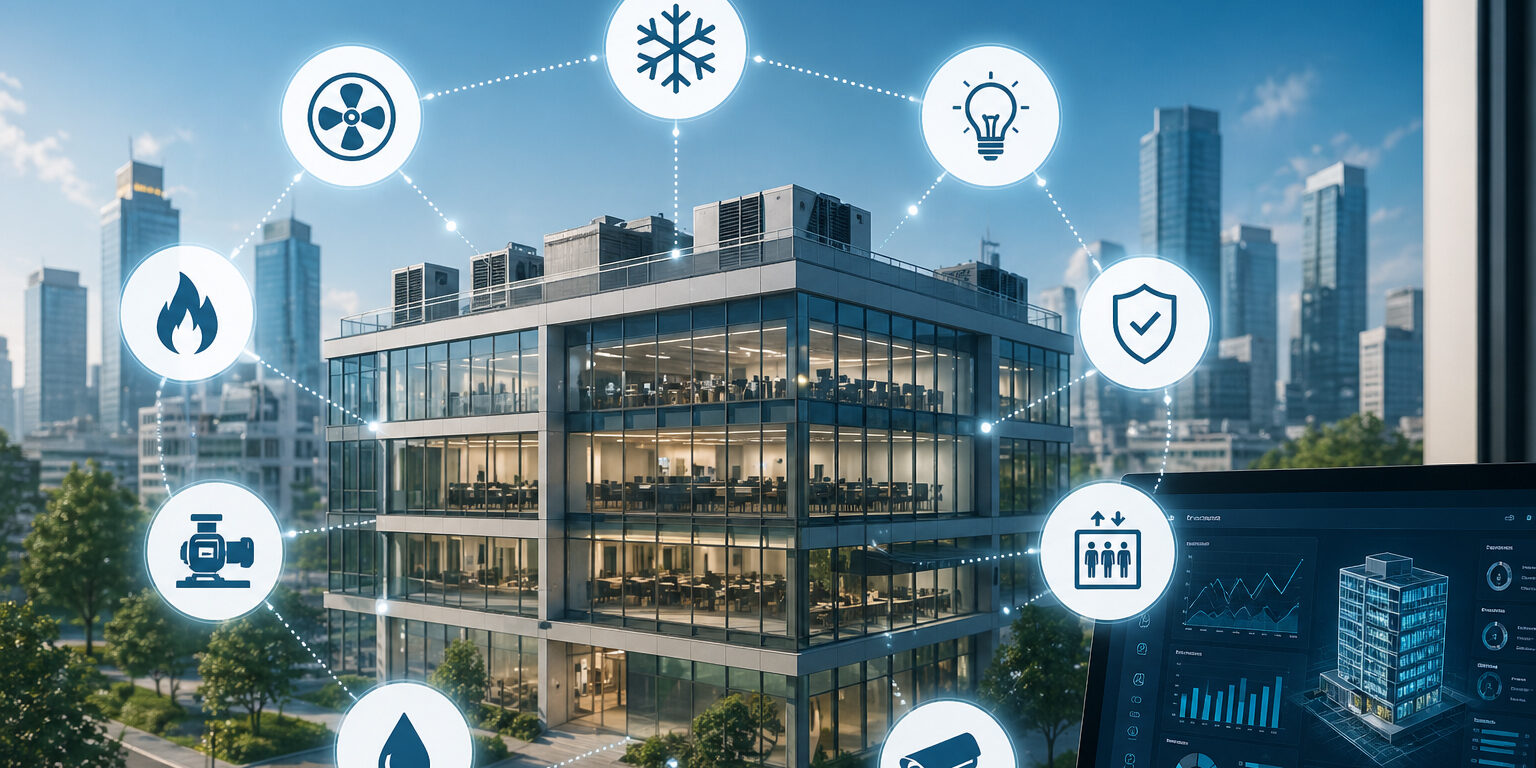
BMS integration means connecting major building systems so they can be monitored and managed through one coordinated platform.
In practical terms, it allows facility teams to track how different services are performing without switching between disconnected systems. BMS is commonly used to manage mechanical, electrical, and electromechanical services such as air-conditioning, ventilation, pumps, lighting, and power-related controls.
Why is BMS integration important?
It gives building operators better visibility, faster fault detection, and more control over daily performance.
Instead of reacting only when something fails, operators can identify trends, unusual readings, or inefficient equipment earlier. That matters in offices, shopping centres, industrial facilities, and mixed-use developments where downtime can affect both tenants and operating costs.
How does BMS integration improve energy efficiency?
A connected BMS helps building teams monitor energy use more closely and respond to waste more quickly.
BCA’s Green Mark guidance highlights integrated energy management, energy consumption monitoring, and control strategies for commercial buildings. It also supports automatic controls for air-conditioning systems to respond to periods of lower use or reduced load, which is especially useful in larger facilities.
This is one reason many owners review their control panel in Singapore setup when planning building upgrades. Better controls often start with better system visibility.
Why does BMS integration matter for HVAC systems?
HVAC is one of the most important and energy-intensive systems in a commercial building, so poor coordination can lead to waste and uneven performance.
With proper integration, facility managers can monitor temperature trends, fan status, pump operation, and system alarms more effectively. That is why many projects involve an experienced HVAC control panel contractor when improving building controls.
How do MCC, PLC, and VSD panels fit into BMS integration?
BMS works best when the underlying control hardware is designed to support it properly.
For example, an MCC panel contractor in Singapore may provide the motor control infrastructure needed for larger building systems. PLC panel fabrication is often used when automation logic is needed for pumps, ventilation, and process control.
Where motor speed needs to change based on actual demand, VSD panel installation helps improve efficiency and gives the BMS more flexible control over equipment.
Does BMS integration help with maintenance?
Yes, because it makes system behaviour easier to track over time.
Instead of waiting for a major failure, facility teams can review alarm history, operating hours, and changing performance patterns. This supports smarter maintenance planning and faster troubleshooting.
Reliable data also depends on accurate sensors and field devices, which is why instrumentation services in Singapore are often part of a broader integration project.
Does BMS integration affect compliance in Singapore?
BMS integration does not replace legal compliance, but it can support safer and more organised building operations.
Singapore requires electrical work to be carried out by licensed electrical workers, and certain installations must be inspected and managed accordingly. EMA states that electrical work such as new wiring, rewiring, and extensions must be undertaken by a licensed electrical worker. SCDF also regulates fire safety works and approvals for buildings in Singapore.
That is why many commercial projects work with an electrical control panel builder in Singapore who understands both practical system integration and local requirements.
Who benefits most from BMS integration?
BMS integration is especially useful for commercial buildings with multiple systems, long operating hours, or high energy demand.
That includes office towers, hotels, shopping centres, industrial buildings, and facilities with centralised mechanical systems. In these environments, better coordination usually leads to better visibility, faster response times, and more consistent building performance.
Final Thoughts
BMS integration matters because it helps commercial buildings run with more clarity and less guesswork.
When building systems are connected properly, operators can monitor performance more easily, respond faster to issues, and support better energy management over time. In Singapore, where efficiency, safety, and reliability all matter, that makes BMS integration a practical investment rather than just a technical upgrade.
Conclusion
For commercial buildings that need stronger control, clearer system visibility, and more reliable day-to-day performance, integrated building systems can make a real difference.
Techtimia Engineering Pte. Ltd supports commercial projects involving control systems, panel solutions, automation, and integration work in Singapore. Contact the team to discuss your building requirements.