A cooling tower may look straightforward from the outside but maintaining one involves much more than cleaning the basin and checking whether the fan is running.
For commercial buildings and industrial facilities, a professional cooling tower PM service in Singapore should examine mechanical components, water distribution, cleanliness, equipment condition and operating performance. Water hygiene is particularly important because cooling towers generate aerosols and are regulated by Singapore’s National Environment Agency (NEA).
So, what should facility managers actually expect when preventive maintenance is carried out?
It Usually Starts With a Visual and Operational Inspection
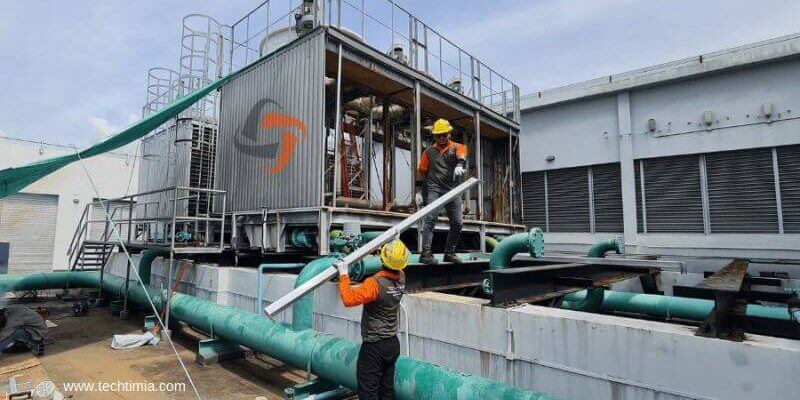
The initial inspection may look for corrosion, unusual noise, vibration, leaks, damaged components, debris and signs of poor water distribution.
NEA’s guidance states that cooling towers should be maintained in good working condition and free from physical damage or deterioration. Cooling towers are also required to be inspected at least weekly for physical defects, cleanliness, organic fouling and physical debris.
The Fan and Motor Need More Than a Quick Look
Depending on the tower design, technicians may assess:
- Fan blades and balance
- Motor condition
- Bearings and lubrication
- Belts and tension
- Drive shafts and couplings
- Gearbox condition
- Alignment
- Abnormal vibration or noise
A small mechanical problem detected during planned servicing can often be addressed before it causes a shutdown.
If wider cooling equipment is also showing problems, Top 10 Signs You Need HVAC Repair & Basic HVAC Troubleshooting in Singapore is a useful related guide.
Fill Media, Drift Eliminators and Nozzles Are Checked Next
Fill media provides surface area for heat exchange between water and air. Scale, dirt or biological fouling can reduce its effectiveness.
Nozzles and water distribution components should also be checked for blockage or uneven distribution. Drift eliminators need attention because they are designed to reduce the release of water droplets from the tower.
A comprehensive cooling tower PM service in Singapore should therefore look beyond visible mechanical equipment and examine how effectively water and air are moving through the tower.
Basin Cleaning Is Only One Part of Tower Cleaning
Cleaning may involve removing sludge, cleaning internal surfaces, clearing nozzles and addressing deposits on accessible components. The exact work required depends on tower condition and operating environment.
In Singapore, this is more than a general housekeeping issue. NEA requires thorough cleaning, disinfection and manual desludging of cooling towers at least once every six months.
Why Is Water Treatment Included in Preventive Maintenance?
NEA specifically calls for a comprehensive maintenance programme that includes cleaning, disinfection and water treatment to control Legionella bacteria and help water-treatment chemicals work effectively.
Water treatment support may therefore involve reviewing:
- Water quality
- Chemical dosing
- Scale formation
- Corrosion
- Blowdown operation
- Biological growth
Facilities looking for Cooling Tower Services & Preventive Maintenance in Singapore should check whether water-management requirements are considered alongside mechanical servicing.
Are Water Quality Tests Part of Singapore's Requirements?
Owners or occupiers must arrange prescribed water-quality testing through a Singapore Accreditation Council-accredited laboratory and submit results to NEA at the stipulated frequencies.
This testing should not be confused with an ordinary visual PM inspection. It is a specific regulatory responsibility associated with operating cooling towers in Singapore.
Performance Checks Help Complete the Picture
Depending on the system, this may include checking:
- Water flow
- Fan operation
- Motor behaviour
- Vibration
- Operating temperatures
- Water distribution
- Unusual sounds
- Visible leakage
Cooling towers form part of a wider cooling system, so poor tower performance can also affect other ACMV equipment. What Is the Difference Between ACMV and HVAC in Singapore? provides useful background on how these building systems fit together.
What Should Happen After the PM Visit?
Maintenance records can document faults found, work completed, parts requiring attention and issues that should be monitored at the next visit.
This makes preventative maintenance cooling tower in Singapore programmes more valuable over time because maintenance teams can identify recurring problems rather than treating every service visit as an isolated event.
What Should Happen After the PM Visit?
Maintenance records can document faults found, work completed, parts requiring attention and issues that should be monitored at the next visit.
This makes preventative maintenance cooling tower in Singapore programmes more valuable over time because maintenance teams can identify recurring problems rather than treating every service visit as an isolated event.
Does Every Cooling Tower Need the Same PM Schedule?
Singapore’s regulatory requirements still apply independently. For example, NEA requires weekly visual inspections and thorough cleaning, disinfection and manual desludging at least once every six months.
Facility managers should therefore build their PM schedule around both equipment needs and applicable regulatory requirements.
Conclusion
For facility managers reviewing their wider maintenance arrangements, What Should Businesses Look for in an HVAC and ACMV Contractor in Singapore? offers useful points to consider before appointing a service provider.
Techtimia Engineering Pte. Ltd provides cooling tower inspection, cleaning, repair, water treatment support and preventive maintenance for commercial and industrial facilities in Singapore. Arrange a site inspection to identify the maintenance needs of your cooling tower system.