Hiring an aircon installer in Singapore isn’t just about pricing or availability. Installers must follow specific regulations designed to protect homeowners, ensure safety, and prevent environmental harm. Yet many homeowners are unaware of what installers are legally required to comply with.
This article explains the key regulations Singapore aircon installers must follow, what those rules mean for homeowners, and how compliance affects performance, safety, and long-term costs.
Are Aircon Installers Regulated in Singapore?
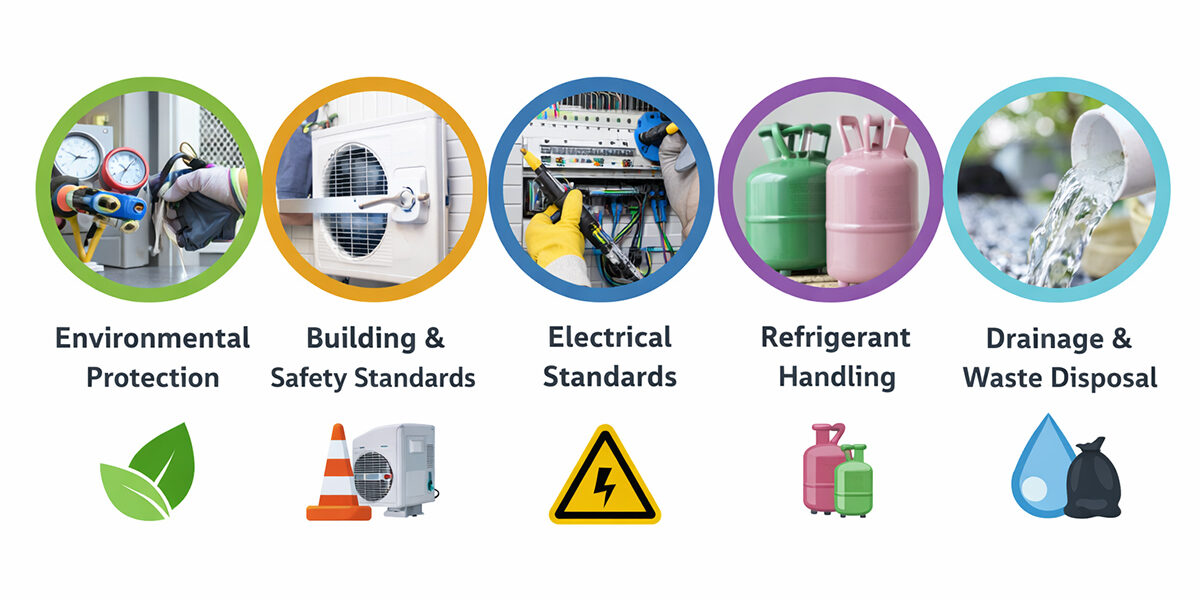
Yes. Aircon installation in Singapore is governed by multiple regulatory frameworks that cover:
- Environmental protection
- Workplace safety
- Electrical and building standards
- Refrigerant handling
- Waste disposal
Installers are expected to comply with requirements set by authorities such as NEA, BCA, EMA, and SCDF, depending on the scope of work.
What NEA Rules Apply to Aircon Installers?
Refrigerant Handling Regulations
Under Singapore’s environmental regulations, refrigerants must be handled responsibly to prevent leakage and environmental damage. Installers are required to:
- Use approved refrigerants
- Prevent venting refrigerant into the atmosphere
- Recover and dispose of refrigerants correctly
Improper handling can result in system inefficiency, higher electricity bills, and future aircon repair Singapore issues.
If refrigerant performance is already declining, this guide explains when replacement is necessary:
When Should You Replace Your Air-Con Refrigerant in Singapore?
Do Installers Need to Follow Building and Safety Standards?
Yes. Installers must comply with standards enforced by the Building and Construction Authority (BCA) and Singapore Civil Defence Force (SCDF) when applicable.
These include:
- Safe mounting of indoor and outdoor units
- Proper support brackets and load handling
- Compliance with fire safety clearances
- Correct routing of piping and drainage
Poor installation practices can lead to vibration issues, water leakage, or even safety hazards.
What Electrical Regulations Must Be Followed?
Aircon systems are electrical appliances, so installers must follow requirements under the Energy Market Authority (EMA) and general electrical safety standards.
This includes:
- Proper circuit load management
- Safe wiring practices
- Correct use of isolators
- Avoiding overloaded sockets or unsafe extensions
Electrical non-compliance can cause system failures and increase fire risks.
Are There Rules for Drainage and Water Disposal?
Yes. Aircon installers must ensure drainage systems are installed correctly to prevent:
- Water leakage
- Mold growth
- Structural damage
- Blocked pipes
Improper drainage installation is one of the most common causes of service calls in Singapore.
Learn what happens when drainage is not done correctly here: What Happens If Your Air-Con Drain Pipe Is Blocked in Singapore?
Does Installation Quality Affect Energy Efficiency Compliance?
Absolutely. Even if an aircon unit is energy-efficient on paper, poor installation can negate those benefits.
Incorrect placement or piping can cause:
- Outdoor unit overheating
- Poor heat exchange
- Higher electricity usage
This is why compliance matters not only legally, but financially for homeowners.
If you’re planning a new aircon installation Singapore, this guide explains mistakes that often lead to compliance and performance issues: Top 7 Mistakes to Avoid When Choosing Aircon Installation Services in Singapore
How Can Homeowners Tell If an Installer Is Compliant?
Here are signs a professional installer follows regulations:
- Clear explanation of installation steps
- Proper assessment of unit placement
- Safe handling of refrigerants
- Correct drainage setup
- Willingness to explain safety and efficiency considerations
If an installer skips inspections or rushes installation without proper checks, that can be a red flag.
Why Compliance Matters for Long-Term Ownership
Regulatory compliance protects homeowners by:
- Reducing breakdown risks
- Improving energy efficiency
- Preventing repeated servicing issues
- Ensuring safer operation
- Extending system lifespan
Homes with compliant installations typically require fewer emergency calls and experience more consistent cooling performance when paired with routine aircon services Singapore.
Quick Answers for Common Questions
Is aircon installation regulated in Singapore?
Yes. Installers must follow environmental, electrical, and safety standards.
Can improper installation increase electricity bills?
Yes. Poor compliance often leads to inefficiency and higher power usage.
Are refrigerant rules strictly enforced?
Yes. Improper handling can lead to environmental and system performance issues.
Do homeowners need permits for aircon installation?
Most residential installations do not require permits, but installers must still comply with regulations.
Conclusion
Understanding installer regulations helps homeowners make better decisions and avoid long-term problems. If you want professional, compliant installation and servicing support, contact us today Techtimia Engineering Pte. Ltd for reliable guidance and expert solutions.