If you’re planning a building project or upgrading a cooling system in Singapore, you’ve probably seen both ACMV and HVAC used, sometimes interchangeably. That often leads to confusion, especially for building owners, facility managers, and developers trying to choose the right system.
While the two terms are related, they are not the same, especially in Singapore’s construction and engineering context. This article breaks down the differences in a clear, practical way so you can make informed decisions.
What Does HVAC Mean?
HVAC stands for Heating, Ventilation, and Air Conditioning. It is a global term commonly used in the United States and other temperate countries.
An HVAC system typically includes:
- Heating (furnaces, heat pumps)
- Cooling (air conditioners, chillers)
- Ventilation (fresh air intake, exhaust systems)
- Air filtration and humidity control
In colder climates, heating is a major component of HVAC design.
What Does ACMV Mean in Singapore?
ACMV stands for Air Conditioning and Mechanical Ventilation. This term is widely used in Singapore and across Southeast Asia.
An ACMV system focuses on:
- Air conditioning (cooling only)
- Mechanical ventilation
- Fresh air circulation
- Humidity control
Because Singapore has a tropical climate, heating is not required, which is why ACMV is the preferred and more accurate term locally.
Why Does Singapore Use ACMV Instead of HVAC?
The difference comes down to climate and regulations.
Singapore’s building standards and design guidelines prioritize:
- Cooling efficiency
- Humidity management
- Indoor air quality
- Energy efficiency
Since heating systems are unnecessary here, the “H” in HVAC is effectively irrelevant. As a result, ACMV is the standard term used in Singapore’s building codes, engineering drawings, and compliance documents.
Is ACMV Just HVAC Without Heating?
In simple terms, yes, but with important distinctions.
While ACMV can be considered a subset of HVAC, it is designed specifically for tropical conditions. ACMV systems often place more emphasis on:
- Moisture removal
- Continuous ventilation
- Large-scale air distribution
- Integration with building management systems
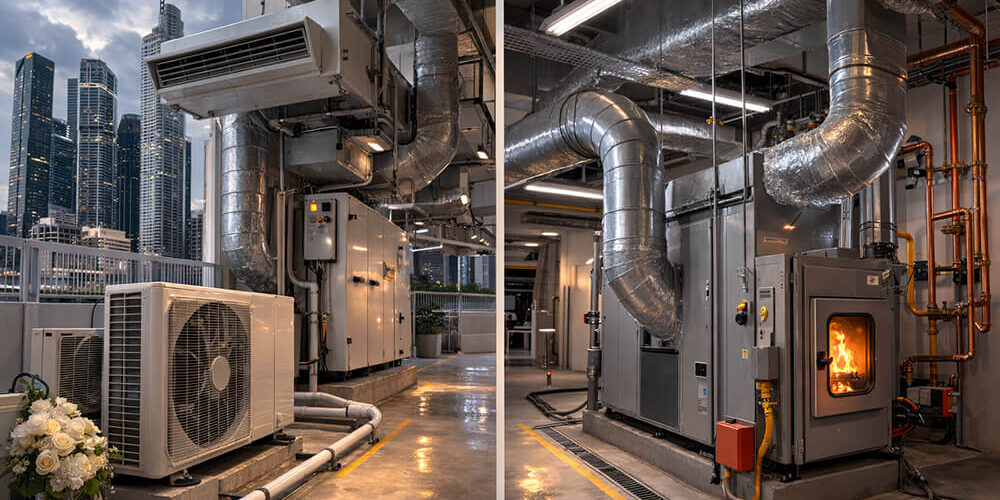
This is why ACMV Installation in Singapore projects are common in malls, offices, hospitals, and industrial facilities.
Which Buildings Typically Use ACMV Systems?
In Singapore, ACMV systems are commonly found in:
- Commercial buildings
- Shopping malls
- Hospitals and clinics
- Hotels
- Industrial facilities
- Data centers
Residential properties usually use split or multi-split aircon systems rather than full ACMV setups.
Where Does HVAC Still Apply in Singapore?
The term HVAC may still appear in:
- International project documentation
- Equipment specifications from overseas manufacturers
- Multinational engineering firms
- Export-oriented industrial projects
However, from a regulatory and practical standpoint, ACMV Service Singapore is the term that aligns with local standards and approvals.
Do ACMV and HVAC Follow the Same Regulations in Singapore?
ACMV systems in Singapore must comply with:
- Building and Construction Authority (BCA) requirements
- Energy efficiency standards
- Indoor air quality guidelines
- Mechanical ventilation rules
These regulations are written around ACMV, not HVAC, even though the underlying engineering principles are similar.
Which System Is More Energy Efficient in Singapore?
ACMV systems are generally more energy-efficient for Singapore’s climate because they are designed without unnecessary heating components.
Proper ACMV design helps:
- Reduce energy waste
- Maintain stable indoor temperatures
- Control humidity
- Improve long-term operational costs
This is one reason large developments prioritize ACMV over generic HVAC systems.
Should You Look for HVAC or ACMV Services in Singapore?
If you’re in Singapore:
- Look for ACMV Installation in Singapore for large or commercial projects
- Use ACMV Service in Singapore for maintenance and compliance needs
The term HVAC Installation in Singapore is still understood, but ACMV is the technically correct and locally accepted term.
Quick Answers for Common Questions (PAA-Friendly)
Is HVAC used in Singapore?
The term is used, but ACMV is the correct local standard.
Is ACMV the same as air conditioning?
No. ACMV includes ventilation and air quality control, not just cooling.
Do homes use ACMV systems?
No. ACMV includes ventilation and air quality control, not just cooling.
Which term should I use for commercial projects?
ACMV is preferred for commercial and industrial buildings in Singapore.
Conclusion
Understanding the difference between ACMV and HVAC helps avoid design mistakes, compliance issues, and unnecessary costs. For professional guidance on system selection, installation, or maintenance, contact Techtimia Engineering Pte. Ltd for expert support tailored to Singapore’s climate and standards. Contact us today.