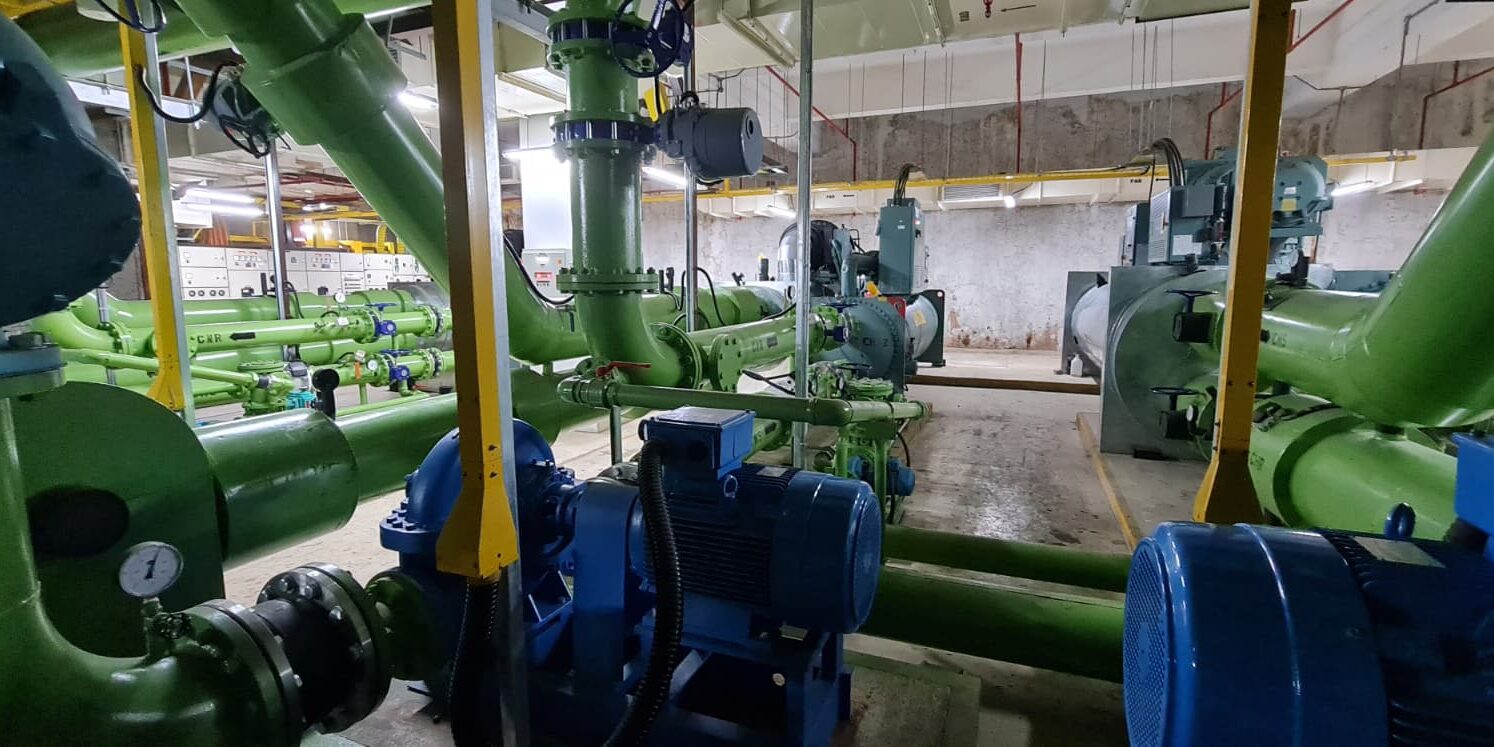
A fire pump may sit idle for weeks, yet it must operate reliably when a fire protection system needs water. That is why regular testing matters, even when the equipment appears to be in good condition.
For building owners and facility managers, one common question is how frequently fire pumps need attention. The answer depends on the pump type, installed fire protection system, applicable standards, and maintenance arrangements.
Understanding the requirements for fire pump servicing in Singapore can help facilities plan inspections, identify faults early, and maintain fire protection readiness.
What Does Singapore Require for Fire Pump Maintenance?
The relevant requirements depend on the system. For example:
- SS CP 52: Applies to automatic fire sprinkler systems.
- SS 575: Covers fire hydrant, rising main, and hose reel systems.
Under SCDF Fire Code Clause 1.2, maintenance details must also be documented in the building’s Fire Safety Instruction Manual.
Importantly, these requirements should not be interpreted as one fixed servicing frequency for every fire pump.
Facility managers should refer to the applicable standard, approved system documentation, manufacturer’s instructions, and the building’s established maintenance program.
How Often Should Fire Pumps Be Checked?
The following table explains how different activities fit into a maintenance program.
| Maintenance activity | What facility managers should know |
| Routine condition checks | Look for visible leakage, abnormal indications, and changes in equipment condition at the frequency required by the maintenance program. |
| Operational testing | Verify pump starting and operation according to the applicable standard and approved testing procedure. |
| Periodic mechanical servicing | Inspect seals, bearings, couplings, alignment, and other components according to their condition and service requirements. |
| Performance testing | Assess relevant flow, pressure, and operating performance at the prescribed intervals. |
| Corrective maintenance | Investigate and rectify identified defects without waiting for the next scheduled service. |
This is a maintenance-planning guide, not a statutory frequency schedule. Actual intervals must be established for the specific installation.
For a broader understanding of planned maintenance, see our article What Are the Benefits of Monthly and Quarterly Pump Maintenance Services in Singapore? General pump maintenance intervals should not automatically be applied to fire protection systems.
Does Every Fire Pump Follow the Same Testing Schedule?
Main fire pumps provide the water flow and pressure required when the fire protection system operates. Testing must assess their ability to perform their intended function.
Jockey pumps maintain system pressure during minor pressure losses. Their maintenance involves checking pressure controls, pump operation, and possible causes of excessive cycling.
Our related guide, What is the Difference Between a Fire Pump and a Jockey Pump? explains why these pumps should not be treated as interchangeable equipment.
Electric and diesel-driven fire pumps also have different maintenance considerations. Diesel units require attention to their engines, batteries, fuel systems, and starting arrangements, while electric units have motor and electrical-control requirements.
Is Annual Fire Safety Inspection Enough?
SCDF’s Fire Certificate guidance explains the inspection arrangements applicable to buildings requiring a Fire Certificate.
However, Fire Certificate validity and routine fire pump testing are separate matters.
Facility managers should maintain the required inspection and testing program regardless of the building’s Fire Certificate renewal cycle.
What Should Be Recorded After Fire Pump Testing?
Depending on the testing scope, documentation may include:
- Date of inspection and pump identification
- Starting and operating observations
- Suction and discharge pressure readings
- Unusual vibration, noise, or leakage
- Mechanical and control-system defects
- Repairs completed and outstanding recommendations
These records help maintenance teams recognize developing problems and follow up on unresolved defects.
They also provide useful information when arranging fire pump maintenance in Singapore or reviewing previous equipment performance.
What Happens If a Fire Pump Fails a Test?
Possible causes include mechanical deterioration, motor problems, control faults, or issues affecting the water supply.
The appropriate response depends on the failure and its implications for the fire protection system.
A qualified service team should assess the equipment, document the findings, and recommend corrective action. Where fire protection availability is affected, the building’s appointed fire safety personnel should coordinate the necessary precautions and restoration arrangements.
Our article What Causes an Electric Fire Pump Motor to Overheat? explores one mechanical and electrical issue that may require further investigation.
How Should Facility Managers Plan Fire Pump Servicing?
Before engaging a fire pump contractor in Singapore, confirm which inspection, testing, mechanical servicing, and reporting activities are included.
Also establish who is responsible for statutory fire protection testing and how defects will be escalated.
Where fire pump repair in Singapore is required, the repair scope should be clearly documented, with appropriate operational verification after the work.
Conclusion
Regular inspections, documented testing, and timely repairs help building teams identify problems before they affect system readiness.