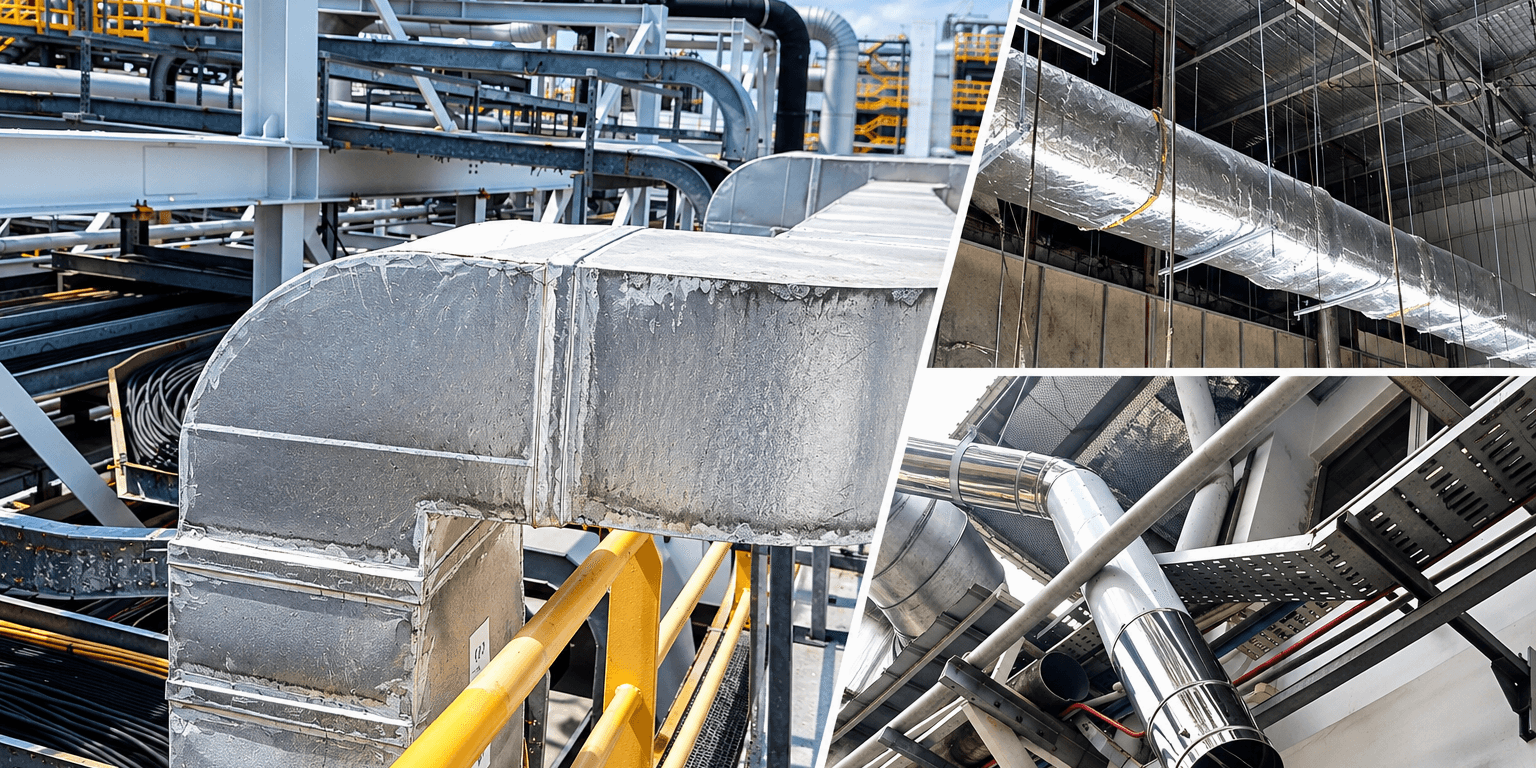
The air leaving an air-conditioning unit may be properly cooled, but it still has to travel through ductwork before reaching offices, shops, meeting rooms or other occupied spaces.
Along the way, the duct may pass through ceiling voids, plant areas and other spaces that are considerably warmer than the conditioned air inside it.
In Singapore’s warm and humid environment, suitable duct insulation plays an important role in limiting unwanted heat gain and reducing the risk of condensation.
What Does ACMV Duct Insulation Actually Do?
For ducts carrying conditioned air, it reduces the rate at which heat from the surrounding environment transfers through the duct surface and into the cooler air inside.
It can also help keep the external duct surface temperature above the surrounding air’s dew point when the system is correctly designed, reducing the likelihood of surface condensation.
Our article “What is ACMV Ductwork and Why Is It Important for Commercial Buildings in Singapore?” provides more background on how these ducts distribute air throughout a commercial building.
Why Is Condensation Such an Important Issue?
When warm, moisture-containing air comes into contact with a sufficiently cold duct surface, water vapour can condense into liquid water.
You may then notice:
- Water droplets on duct surfaces
- Damp ceiling areas
- Staining around ducts
- Wet insulation
- Moisture around joints
- Damage to nearby finishes
However, condensation should not automatically be blamed on insulation alone. Air leakage, damaged vapour barriers and other ACMV conditions can also contribute.
Insulation Helps Keep Conditioned Air Conditioned
Heat can enter through the duct surface before the conditioned air reaches the intended room.
The ACMV system has already used energy to cool that air, so unwanted heat gain works against the purpose of the system.
Suitable insulation helps reduce this thermal transfer. This is one reason insulation should be considered during aircon duct fabrication in Singapore, rather than treated as an optional finishing detail after installation.
Can Poor Duct Insulation Affect Energy Efficiency?
Heat gain through inadequately insulated conditioned-air ducts can contribute to thermal losses within the air distribution system. The extent of the impact depends on factors such as duct location, temperature difference, insulation properties and operating hours.
Energy performance should still be viewed as a whole-system issue.
Equipment efficiency, controls, airflow, duct leakage, operating schedules and maintenance condition can all influence consumption. Our related article “How Does Poor Ductwork Design Affect ACMV Performance and Energy Efficiency?” explores several of these factors.
Damaged Insulation Can Be Just as Problematic
Insulation can become torn, compressed, detached or wet. Vapour barriers may also become damaged around joints, supports or areas where maintenance work has taken place.
These defects can create localised areas where condensation or heat gain occurs.
Professional aircon duct repair in Singapore should therefore consider the condition of both the duct and its insulation rather than looking only for damage to the metalwork.
What Happens If Duct Insulation Gets Wet?
Moisture can reduce the effectiveness of some insulation materials and may damage surrounding ceilings or finishes. Persistent dampness can also indicate that the source of the moisture has not been corrected.
The first step should be identifying why the insulation became wet.
Possible causes include condensation, damaged vapour barriers, nearby water leaks or other moisture sources. The affected material can then be assessed to determine whether repair or replacement is appropriate.
Does Duct Cleaning Include Insulation?
Aircon duct cleaning in Singapore generally concerns contamination or deposits associated with the air distribution system. Insulation repair is a separate issue.
Cleaning a duct will not correct damaged external insulation, just as replacing insulation will not resolve contamination inside a duct.
This distinction is useful because facility managers need to identify the actual problem before choosing a service.
Insulation Also Needs Attention Around Joints and Supports
These areas require careful detailing so that the insulation and vapour-control layer remain sufficiently continuous.
Gaps can create local cold spots where condensation becomes more likely.
For the same reason, insulation should be properly reinstated after duct modifications or repair work rather than leaving sections exposed.
When Should Facility Managers Inspect Duct Insulation?
Insulation deserves closer attention when facility teams notice recurring condensation, damp ceiling tiles, damaged external coverings, exposed duct surfaces or visibly deteriorated insulation.
It is also worth checking during renovations and duct modifications.
Our guide “How Do You Know If Your Commercial Ductwork Needs Repair or Replacement?” can help when problems extend beyond insulation to the physical condition of the duct system itself.
Is More Insulation Always Better?
Insulation should be selected and installed according to the requirements of the particular duct system. Thickness, thermal properties, vapour control, fire performance and the environment through which the duct passes all need consideration.
Simply adding additional insulation without understanding the cause of an existing condensation problem may not provide the correct solution.
Professional aircon duct services in Singapore should assess the system condition and application before recommending remedial work.
Conclusion
By limiting unwanted heat gain and helping manage condensation risk, correctly designed and maintained insulation supports the performance of conditioned-air ductwork. Damaged, wet or incomplete insulation should therefore be investigated before it creates recurring moisture or performance problems.