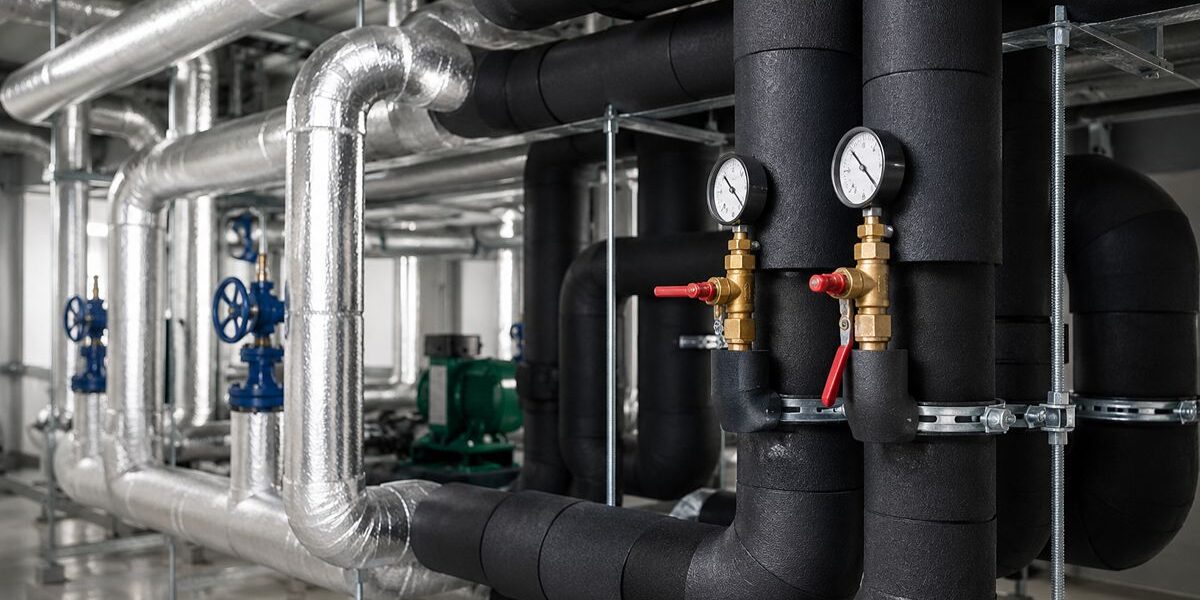
Pipe insulation is often hidden above ceilings, inside plant rooms, or behind service panels, but it plays a major role in how efficiently a building’s water systems operate.
For commercial buildings, hotels, hospitals, schools, and industrial facilities in Singapore, proper insulation helps control water temperature, reduce energy waste, and protect surrounding areas from moisture-related damage.
Chilled and Hot Water Pipes Have Different Challenges
Hot water pipes face the opposite issue. Heat can escape from the pipe into the surrounding area, causing the system to use more energy to maintain the required water temperature.
Both systems need suitable insulation, but the material and installation approach may differ according to temperature, pipe size, location, and operating conditions.
Why Does Condensation Form on Chilled Water Pipes?
Small droplets may initially seem harmless, but continuous condensation can lead to:
- Water staining on ceilings
- Damp insulation
- Mould growth
- Corrosion beneath insulation
- Damage to nearby equipment
- Slippery floors in plant areas
Professional chilled water pipe insulation services in Singapore help create a barrier between the cold pipe and humid surrounding air. The insulation must also be properly sealed so moisture cannot enter through joints or damaged sections.
How Does Insulation Improve Chilled Water System Efficiency?
Without effective insulation, the water can absorb heat as it travels through the pipework. This increases the cooling load and may force chillers, pumps, and related equipment to work harder.
Proper insulation helps maintain the intended water temperature from the plant room to the point of use. It can also support more stable system performance across larger commercial properties.
Why Should Hot Water Pipes Be Insulated?
In larger buildings, long pipe runs can result in noticeable temperature loss before the water reaches washrooms, kitchens, or process areas. The system may then need to reheat the water more frequently.
hot water pipe insulation services in Singapore help slow this heat loss and maintain a more consistent delivery temperature.
This can be particularly valuable in hotels, healthcare facilities, commercial kitchens, and industrial buildings where hot water demand is frequent or continuous.
Can Pipe Insulation Help Reduce Energy Use?
For chilled water systems, insulation reduces unwanted heat gain. For hot water systems, it limits heat loss.
When the system maintains temperature more effectively, cooling and heating equipment may not need to operate as intensively. The amount of energy saved depends on the building, pipe length, insulation condition, and operating schedule.
What Happens When Pipe Insulation Is Damaged?
It can become damaged by water ingress, poor maintenance access, accidental impact, ageing, or incomplete sealing. Once the outer barrier is compromised, moisture may reach the insulation material and reduce its performance.
Common warning signs include:
- Wet or sagging insulation
- Cracked outer coverings
- Visible condensation
- Rust marks around joints
- Unusually warm or cold plant areas
- Higher system energy use
- Water stains near pipe routes
Damaged sections should be inspected rather than simply covered with tape. Moist insulation may need to be removed and replaced so the condition of the pipe underneath can be checked.
Why Is Correct Installation So Important?
Gaps between sections, poorly sealed joints, compressed insulation, and unsuitable thickness can all reduce performance. Chilled water pipework is especially sensitive because even a small break in the vapour barrier may allow condensation to form.
A professional installer should consider:
- Pipe operating temperature
- Pipe diameter
- Indoor humidity
- Location of the pipework
- Required insulation thickness
- Vapour barrier continuity
- Access for future maintenance
- Exposure to water or physical damage
The goal is to create a continuous, durable insulation layer rather than covering only the most visible sections.
Does Every Building Need the Same Insulation?
A hotel with long hot water distribution lines will have different needs from an industrial facility using chilled water for process cooling. Pipes located outdoors may also require stronger protection than those installed inside a clean, controlled plant room.
The right solution should be based on system conditions, not a one-size-fits-all specification.
When Should Pipe Insulation Be Inspected?
Inspections are especially important when:
- Condensation appears near pipework
- Ceiling stains develop
- Insulation feels wet
- Corrosion is visible
- A pipe has recently been repaired
- System energy use increases
- Existing insulation is ageing
- New equipment or pipework is installed
Early repairs can help prevent a small damaged section from affecting a much larger area.
Conclusion
Techtimia Engineering Pte. Ltd provides chilled water and hot water pipe insulation support for commercial and industrial facilities in Singapore. Get in touch to arrange an assessment of existing pipework or discuss insulation requirements for a new system.